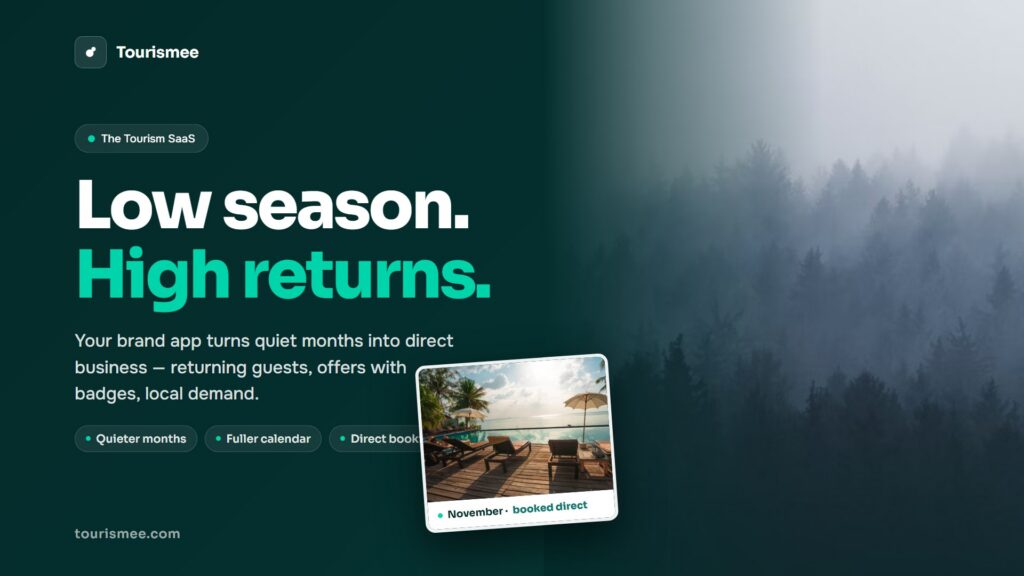
Low season, quiet town, full calendar: the months nobody fights for are yours

Every destination has two seasons: the one where you turn people away, and the one where the silence gets loud. The low season is where margins go to die — or where the smartest operators quietly build their year.
Here’s the shift: in high season you compete with everyone for everyone. In low season you only need the people who already know you — and your app keeps them one tap away, all year.
Let’s see how to work the quiet months — month by month, guest by guest.
The math nobody runs: a quiet month is cheaper to fill
In August you pay for every guest twice: once to the ads, once to the commissions. In November your past guest needs one tap on an icon they already have. Same room, very different cost of acquisition.
Your past guests are the low-season audience
Check-out doesn’t uninstall your app. The icon stays on their home screen: when you publish a November offer, it lands in front of people who already slept well in your beds. No ad budget, no algorithm between you and them.
Offers with badges, prices you set
Midweek stays, spa packages, dinner + room, early-return rates: publish them as posts with badges (Promo, Hot, New) and call-to-actions at your prices. The offer goes live in minutes — and expires when you decide, not when a voucher platform says so.
Tell the other season
Nobody books November in November. Fill your app with the territory as it is off-peak: markets, festivals, slow food, empty trails, museums without queues. Content today is December’s booking — and next spring’s return.
The guests next door
Low season is high season for locals: weekend escapes, dinners out, remote workers looking for a week of quiet. Your app speaks their language — publish local offers and let the territory do the marketing.
Measure, learn, repeat
Which offer got views, which got taps, which got bookings — real data, yours. In low season every experiment is cheap: try, read the numbers, keep what works, drop what doesn’t. By next November you’ll know exactly what your market wants.
An honest note
An app doesn’t invent demand; it captures it and keeps it. The audience you’ll work in November you collect in July — QR codes, receipts, key cards, a good reason to tap. And quiet months stay quiet: the goal isn’t a full house in February, it’s six more rooms sold, direct, at the right price. That’s how good years are built.
How to start in minutes
- Create your account and open Horizon Studio.
- Configure your app: name, logo, colors, subdomain.
- Publish your services and a first batch of low-season offers with badges and call-to-actions.
- Put your QR code where attention lives — tables, windows, key cards, receipts — and start collecting guests now.
- When the season slows down, your audience is already in their pocket: publish, rotate, measure.
Online in about 30 minutes — and you can see it first in the live demo: https://demo.tourismee.com.
Mini FAQ
When is the best time to start?
Before the high season ends: every guest of this summer is the audience of your next November.
Do I need a big audience first?
No — you build it with the flows you already have: QR codes on tables and key cards, receipts, your link. Every install counts.
What offers work off-peak?
Midweek packages, partnerships with local businesses, early-bird returns, long-stay rates for remote workers. Test small, read the data, scale what works.
How do I know it’s working?
Views, clicks on call-to-actions, direct bookings — real numbers in your dashboard, not promises.
In short
August pays the bills; November pays the margins. Your app keeps every season’s guest one tap from the next booking — your guests, your offers, your prices, all year.
Get started — quieter months, fuller calendar.